
Drug development has always been a race against time. Against disease progression, against competing programs, against the patience of funders and the urgency of patients waiting for therapies that don’t yet exist. The scientific tools available to researchers today are extraordinary by any historical measure. And still, for many organizations, the pace of moving a candidate from discovery through development and into the clinic remains frustratingly slow.
Some of that friction is inherent to the biology. But a meaningful portion of it traces back to something more tractable: the equipment decisions made at the beginning of a program, often under time pressure and with incomplete information, that shape what’s possible at every stage that follows.
The relationship between bioprocessing equipment selection and development speed is rarely examined with the attention it deserves. It tends to surface as a problem, in the form of process rework, failed tech transfers, or manufacturing bottlenecks rather than being addressed as a design consideration from the start. Understanding that relationship more clearly, and what it means for how development teams build and equip their workflows, is increasingly relevant as the industry moves into more complex therapeutic modalities and more demanding development timelines.
What is scientific velocity in drug development?
Scientific velocity is a term that gets used loosely, but it has a specific and useful meaning in drug development: the rate at which a team can generate knowledge, test hypotheses, and apply what it learns to move a program forward. Higher velocity doesn’t just mean working faster, it means making better decisions earlier, identifying viable candidates more reliably, and translating scientific insight into manufacturable therapies without the compounding delays that accumulate when critical questions are answered too late.
In biopharmaceutical development, time has a direct relationship with cost and patient access. Programs that move efficiently through development stages consume fewer resources, reach clinical milestones sooner, and are better positioned to respond when market or regulatory conditions shift. The tools and systems supporting those programs shape their velocity in ways that aren’t always visible until something slows down.
How legacy bioprocessing equipment constrains drug development
The life sciences industry carries a significant installed base of equipment designed for an earlier era of drug development; one defined by smaller numbers of modalities, more centralized manufacturing, and less pressure to move quickly across diverse therapeutic categories.
That legacy infrastructure can create real constraints in modern development environments. Systems with limited flexibility make process adaptation difficult when candidates behave unexpectedly or when manufacturing requirements change between development stages. Poor integration with current automation platforms introduces manual steps that add time and variability. Equipment designed around fixed configurations struggles to accommodate the distributed, multi-site manufacturing models that cell and gene therapy programs increasingly require.
These limitations rarely appear as a single dramatic failure. They accumulate as friction in the form of longer setup times, more frequent process deviations, harder technology transfers, and data that arrives later than it should. The cumulative effect on development timelines can be substantial, even when each individual constraint seems manageable in isolation.
Advanced bioprocessing technologies reshaping drug development speed
Across discovery, development, and manufacturing, a range of technologies has materially changed what development teams can accomplish and how quickly. High-throughput screening platforms allow rapid evaluation of large candidate libraries, compressing timelines that once required months into weeks. Laboratory-scale robotics support sample preparation, loading, and analytical workflows with a level of reproducibility that reduces variability at the point where it matters most.
At production scale, automation across filling lines, visual inspection, and isolator systems has improved process control while reducing dependence on operator-to-operator consistency. Continuous processing solutions and modular cleanroom designs have expanded the range of facility configurations that can support clinical and commercial manufacturing. Digital tools, including predictive modeling platforms, process analytical technology, and digital twins are enabling real-time optimization and more rigorous process understanding earlier in development.
Cutting across all of these is a growing emphasis on portability and modularity. Instrumentation that can move between environments, adapt to different workflow configurations, and operate without extensive infrastructure overhead is increasingly relevant as development programs span multiple sites, scales, and organizational contexts.
Why bioprocessing equipment design decisions compound across a program’s lifecycle
The downstream consequences of early equipment choices extend further than most teams anticipate when those decisions are being made. Several dynamics are worth understanding clearly:
- Process parameters established at laboratory scale directly constrain what’s achievable at clinical and commercial scale, keeping in mind that instrument choices made during early development create dependencies that carry through the entire program.
- Analytical methods developed around specific equipment capabilities define how product quality is characterized and measured, creating frameworks that are difficult and expensive to revise once regulatory submissions are underway.
- Manufacturing approaches validated for a particular equipment configuration may not transfer cleanly to a different facility, a different scale, or a different operator, particularly when the original equipment wasn’t selected with portability or cross-site compatibility in mind.
- Equipment that is intuitive to operate and straightforward to maintain reduces dependence on highly specialized personnel, which increasingly matters as the shortage of experienced bioprocess operators continues to affect capacity across the industry.
Access to reliable, high-quality process data earlier in development enables more decisive and better-informed go/no-go decisions, including the ability to assess a candidate’s developability and manufacturability before committing significant downstream resources that allows programs to concentrate investment where it’s most likely to succeed.
Teams that address these considerations deliberately at the equipment selection stage consistently encounter fewer of the rework cycles, failed transfers, and manufacturing surprises that consume time and resources later in development.
Building workflows that support speed without sacrificing quality
The practical implication of all of this is that development speed and process quality are not competing objectives, they are supported by the same underlying conditions. Workflows built around equipment that is adaptable, well-integrated, and designed with the operator in mind generate better data more consistently, with fewer interruptions and less rework. That combination is what actually helps to accelerate programs.
The specific characteristics that support this are fairly consistent across therapeutic modalities and development stages. Equipment that enables faster process setup and changeover reduces the dead time between experimental cycles. Systems that support both scale-up and scale-down allow teams to move between development stages without rebuilding processes from scratch. Improved real-time monitoring reduces batch failure risk and gives teams the information they need to intervene before problems compound. Portable, modular instrumentation extends the range of environments where capable, reliable tools can be deployed.
None of these characteristics require accepting a tradeoff between performance and accessibility. They describe what well-designed equipment looks like when modern workflow requirements are the actual design brief.
How Ensorcell approaches the equipment-velocity relationship in biomanufacturing
The development philosophy at Ensorcell begins with a straightforward question: where are scientists and bioprocess engineers working around their tools rather than with them, and what would those tools look like if they were designed from scratch for how development actually happens today?
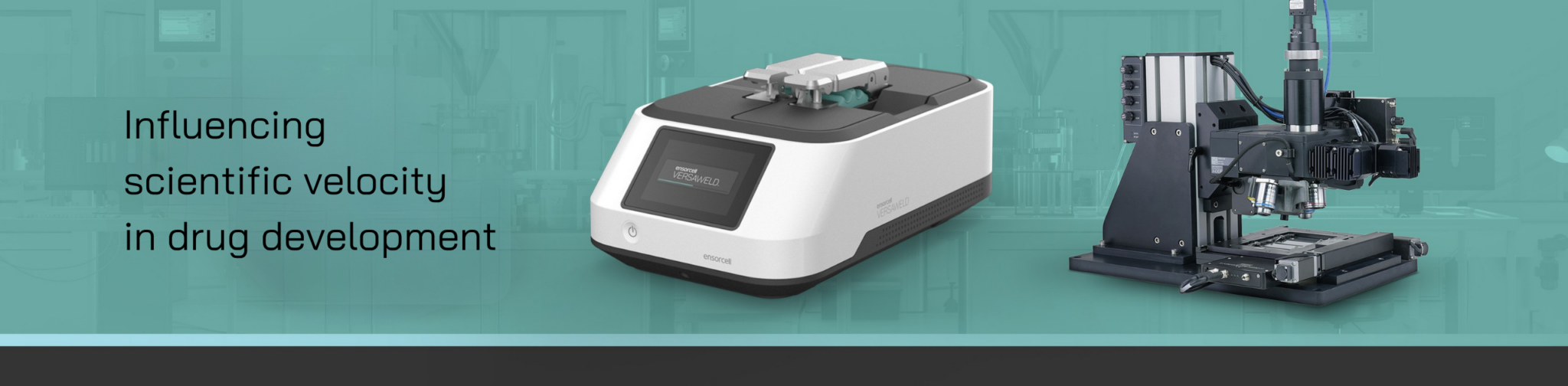
That question drives the engineering decisions behind each product in the Ensorcell portfolio. Versaweld™, our portable sterile tube welder, was built for bioprocess environments where fixed, blade-dependent welders have introduced workflow interruptions that are accepted as normal largely because the alternative hadn’t been made available. Battery-powered, blade-free, and weighing roughly nine pounds, it was designed to move where the work is rather than requiring the work to be organized around it.
Cellular Focus™, our modular high-speed microscopy system reflects the same approach; a capable instrument with clean, serviceable architecture that reduces integration burdens and lowers the total cost of operation over time.
The organizations pushing the most consequential drug development programs forward today are frequently doing so with leaner resources and tighter timelines than previous generations of developers had to manage. Equipment built around that reality, rather than around the assumptions of large-scale centralized manufacturing, is what allows those teams to move at the pace their programs require.
Learn more about Ensorcell’s portfolio of portable, cost-effective bioprocessing tools at ensorcell.bio, or reach out to discuss how our instruments fit your specific workflow requirements.
The pace of innovation in life sciences is accelerating. As new therapies, personalized medicines, and advanced biologics move through development pipelines, the ability to increase scientific velocity in drug development has become a defining factor in success.
In this instance, scientific velocity means moving faster and learning faster, making better decisions earlier, and translating insights into scalable, manufacturable therapies. At the center of this shift is a critical but often underestimated factor: bioprocessing equipment selection.
What is scientific velocity and why does it matter?
Scientific velocity refers to the rate at which knowledge is generated, tested, and applied across the drug development lifecycle. Higher velocity enables faster identification of drug targets, improved understanding of disease pathways, and more efficient progression from discovery to commercialization.
In modern biopharmaceutical manufacturing workflows, this speed directly impacts time to market, cost efficiency, and ultimately patient access to new therapies.
The role of equipment in bioprocessing efficiency
The complexity of biopharmaceutical research, development, and manufacturing requires careful selection of equipment that can support evolving workflows. Legacy systems often introduce constraints, including limited flexibility, poor integration with modern automation, and challenges in scaling across environments.
These limitations can slow bioprocessing workflows, reduce productivity, and introduce variability that impacts product quality. In contrast, equipment designed for adaptability and integration enables more seamless operations and supports higher overall efficiency.
Enabling faster innovation through advanced technologies
Today’s life science environments are increasingly shaped by technologies that accelerate both discovery and production. These include:
- High-throughput screening technologies that enable rapid candidate identification
- Modular biomanufacturing systems that support flexible, scalable production
- Digital biomanufacturing and automation tools such as predictive modeling and digital twins
- Portable life science instrumentation that enables distributed and adaptive workflows
Together, these innovations support faster experimentation, improved process optimization, and more efficient transitions between development stages.
Why equipment design impacts time to market
The design of equipment plays a direct role in determining how quickly organizations can move from concept to clinic. Systems that support faster setup, easier changeover, and real-time process monitoring enable more efficient experimentation and reduce delays. Improved process intensification in bioprocessing allows for higher productivity within smaller footprints, while enhanced monitoring capabilities improve consistency and reduce the risk of batch failure.
More importantly, access to high-quality data earlier in development enables better decision-making. This allows teams to identify viable candidates more quickly and eliminate those unlikely to succeed, improving overall efficiency and reducing cost.
Enabling faster innovation through advanced bioprocessing technologies
Advanced technologies used in pharmaceutical development and manufacturing today span a wide range of integrated systems and tools. These include miniature bioreactors for early-stage process development, laboratory-scale robotic systems for sample preparation, loading, and analysis, and production-scale automation such as isolators, filling systems, and visual inspection platforms. In parallel, continuous processing solutions, modular cleanrooms, and digital tools such as predictive modeling platforms and digital twins are becoming increasingly central to modern biopharmaceutical manufacturing workflows. Across these environments, the importance of automation and portability continues to grow as organizations seek to enable more flexible and responsive operations.
Building a flexible, future-ready biomanufacturing infrastructure
Accelerated pharmaceutical discovery and development is made possible through the adoption of equipment and instrumentation that support high-throughput screening technologies, earlier identification and characterization of potential candidates, and more efficient process optimization. Systems that enable faster process setup and changeover, along with greater flexibility in scaling processes up or down, contribute directly to increased development speed. At the same time, improved process monitoring capabilities enhance consistency and product quality, reducing variability and lowering the risk of batch failure. Together, these advancements support more agile bioprocessing workflows and improve the ability to respond to shifting development and market demands.
Access to higher-quality data earlier in the development lifecycle also enables more informed decision-making, particularly in assessing the developability and manufacturability of candidate therapies. This allows teams to more quickly eliminate candidates that are unlikely to succeed, while focusing resources on those with the greatest potential. The result is a more efficient path to the clinic, supported by optimized processes and cost-effective manufacturing strategies. These impacts extend across the full spectrum of drug development, from complex biologics and cell and gene therapies to high-volume small molecule production, reinforcing the critical role of bioprocessing equipment selection in shaping both innovation and scalability.
How Ensorcell supports scientific velocity
The Ensorcell approach to product development is grounded in simplifying critical workflows while maintaining high performance.
By focusing on portable life science instrumentation and modular system design, Ensorcell solutions are built to reduce friction across R&D and manufacturing environments. This includes delivering tools that are easier to integrate, simpler to operate, and more accessible from both a capital and operational perspective.
Rather than increasing complexity, the focus is on enabling impact. Systems are designed with reliability and longevity in mind, using clean, serviceable architectures that support long-term performance and ease of maintenance.
Looking ahead: Accelerating the future of drug development
As biopharmaceutical innovation continues to expand into more complex modalities and personalized therapies, the need to increase scientific velocity in drug development will only grow.
Equipment choices will play an increasingly central role in enabling this shift. Organizations that invest in flexible, efficient, and well-designed tools will be better positioned to accelerate discovery, improve manufacturing outcomes, and deliver therapies to patients more quickly.
In this context, the question is no longer just what tools are used, but how those tools shape the pace of innovation itself.
Become an adopter of Ensorcell products in your lab – get in touch today!