
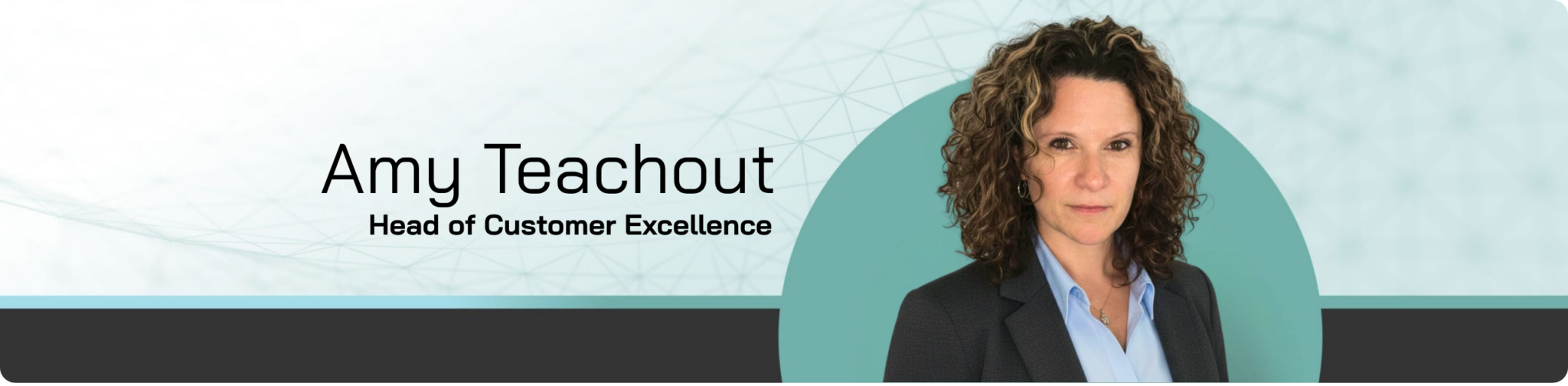
What brought you to Ensorcell?
Coming to Ensorcell was an easy decision for me because of the management and the moment in my career. The alignment of the team and the journey felt like a chance to be part of a once-in-a-lifetime transformation. Not only am I working with subject matter experts and leaders that I have previously had the pleasure of working with, but we are also doing something completely different.
One of the most unique factors for me was being part of the Re:Build Manufacturing (RBM) network and applying their 16 principles. The foundation of Ensorcell is developing and commercializing products by the “why and how” before the bottom line. It is a user first approach that might seem like common sense, but that is not always the case in this market. To take part in commercializing thoughtfully reimagined and reengineered equipment was an extremely appealing and interesting opportunity I could not pass on.
How has bioprocessing tool demand evolved over time?
Bioprocessing tools have become somewhat stagnant due to the layout of the market. Providers are trying to make existing tools work, rather than thinking about what the tools really need to be. And there are big players that dominate the market, which makes getting out of this mindset and getting innovation off the ground an even bigger challenge. Even if companies can come up with new solutions, they can run out of funding or be bought out.
The unfortunate result is that tools exist as they are and are modified as they can be, but no one is asking if those tools are what people actually need or want to use. Generally speaking, the mindset is “but we have always done it this way”. But what if that way is not working or could be reimagined to work better? We have a user-driven mindset that is the basis for our products and our overall philosophy.
With the Versaweld sterile tube welder, customers are continually telling us how frustrated they have been for decades with their limited options. So, who says that we cannot look at existing technology and tools with a user-based mindset and try something new? At Ensorcell, we are exploring user-centric, mobile equipment for critical bioprocess applications. Our team is identifying tools in the industry and reimagining design, usability and affordability. This naturally results in a more streamlined approach to each tool, which lowers cost. This lower cost is then passed on to the customer as much as possible, rather than focused on inflated income. It’s a long game mentality.
What differentiates Ensorcell from competitors?
Our team is driven by making healthcare better to help patients before profit. As with any business, the bottom-line matters obviously, but it is not the only thing here. We believe in these products and the impact that they can have on the market, and we are committed for the long term to thoughtfully expanding this portfolio. By delivering reimagined solutions for lower cost, we hope that it will drive a new approach in the industry to making medical innovation more accessible and sustainable over time.
As I alluded to before, with our Versaweld sterile tube welder, when you look at the existing solutions on the market you realize that what may seem mundane is actually very exciting. We are having early adopters express a lot of enthusiasm and excitement over how nice it is to have another option, and one that feels designed just for them. That is the crux. That is the differentiator—we are fully committed to continuous improvement designed for the user and the application.
How does the unique structure of Ensorcell impact the customer?
The structure impacts the customer in a positive way because we can operate with startup speed and big company resources. The time from concept to commercialization is sped up, and the supply is secure within the RBM network.
This means we can take steps back to what the customer truly needs while focusing on saving time and money in each process. This is not about what is best for our production line, it is about what is best for their process. We are also able to rapidly develop and evolve products that customers want to use via elimination of overengineering and corded constrictions. We aim for portability wherever possible.
What is your favorite thing about working in the life sciences sector?
Being a little bit of an outsider coming back into the life sciences sector, I am inspired by the progress and the opportunity for innovation. There is so much going on across biotech and pharma with people focused on engineering to better human health. I like the fact that there are people with different points of view and experience who are driven to optimize their strengths for the betterment of humanity.
That might sound a little cheesy, but this is truly an industry of different experiences coming together with different approaches to problems and solutions with a common goal of improving human health. The life sciences industry attracts people who want to know both the “what” and the “why”, so it is always moving ahead, and you see a lot of passion and purpose.